
🧰 Tools & Gear You’ll Need
- A strong trash bag for discards
- Boxes or bins for donations
- Cleaning supplies (vacuum, duster, all-purpose cleaner)
- Measuring tape
- A step stool or ladder (if needed for high shelves)
- Storage bins, baskets, shelf dividers, drawer organizers, hanging organizers, shoe racks (specific types detailed later)
- Labels and a marker
- Good lighting (essential for seeing what you have!)
Clear Everything Out
This isn’t just about tidying; it’s a full reset. Empty your walk-in closet completely. Yes, everything. This allows you to see the actual space you have and tackle each item without the clutter surrounding it. Pile items in your bedroom or an adjacent area, sorted roughly by category (tops, bottoms, dresses, shoes, accessories).
Deep Clean the Space
With the closet empty, give it a thorough cleaning. Vacuum or sweep the floor, dust all shelves and rods, and wipe down any surfaces. A clean slate is more motivating and hygienic. This is also the prime time to assess your lighting – is it bright enough? Consider adding an LED strip or a battery-operated puck light if it’s dim.
Decluttering First: The Essential Pre-Organization Step
The Ruthless Purge: Identifying What to Keep, Donate, or Discard
This is where the “hard truths” come in. Go through every single item you’ve removed from the closet. Be honest and decisive. Use the three-pile method: Keep, Donate/Sell, and Discard.
- Keep: Items you wear regularly, fit well, are in good condition, and make you feel good.
- Donate/Sell: Items that are in good condition but you no longer wear, don’t fit, or don’t suit your style. Think consignment shops, online marketplaces, or local charities.
- Discard: Items that are damaged beyond repair, stained, worn out, or otherwise unusable. These go straight into the trash or textile recycling if available.
A tough but essential question: “Have I worn this in the last year?” If the answer is no, and it’s not a highly sentimental or specialized item, strongly consider letting it go. Another critical point is “Does this fit my *current* lifestyle and body?” Holding onto things for a hypothetical future self is a major clutter trap.

Seasonal Swaps: Maximizing Space with Off-Season Storage
If you live in a climate with distinct seasons, rotating your wardrobe is a game-changer for walk-in closet efficiency. Pack away off-season clothing, shoes, and accessories. Use vacuum-seal bags for bulky items like sweaters and coats to save significant space. Store these items in clearly labeled bins or containers. Where you store them depends on your space: high shelves in the closet, under the bed, or even a dedicated storage area.
The mistake many make is storing off-season items *in* their primary closet space, leading to a perpetually crammed wardrobe. True efficiency means removing what you don’t need *now*.

Optimizing Layout and Storage Solutions for Your Walk-In Closet
Maximizing Vertical Space: Shelving, Stacking, and Hanging Strategies
Walk-in closets often have untapped vertical real estate. Assess your existing shelving and rods. Can you add another shelf? Can you install a double hanging rod system to create more hanging space? Consider adjustable shelving units for flexibility. Stackable shelf organizers can create mini-shelves within existing larger ones, perfect for sweaters or handbags.
Hanging: Group like items together (all shirts, all pants, all dresses). Consider the heights needed – longer dresses and coats need a dedicated tall section, while shirts and blouses can share a shorter section, potentially allowing for a shelf above or below.
Shelving: Use shelf dividers to keep stacks of folded items neat and prevent them from toppling. Avoid stacking items too high; aim for 3-5 items per stack maximum. For deep shelves, use baskets or bins to segment the space and make items at the back accessible.

The Art of Folding: Efficient Techniques for Drawers and Shelves
How you fold impacts space and wrinkle prevention. For drawers, the KonMari vertical folding method is excellent. It allows you to see everything at a glance without disturbing the whole drawer. File folded items vertically, like files in a cabinet. For shelves, neat, tight folds are key. Aim for uniform sizes so stacks are stable and don’t lean.
Sweaters can often be folded rather than hung to prevent stretching. T-shirts, activewear, and casual items are prime candidates for drawer folding. Delicate or easily wrinkled items (like linen or some dress shirts) might be better hung. The key is consistency within each storage type (drawers vs. shelves).
Shoe Storage Secrets: Keeping Your Footwear Tidy and Accessible
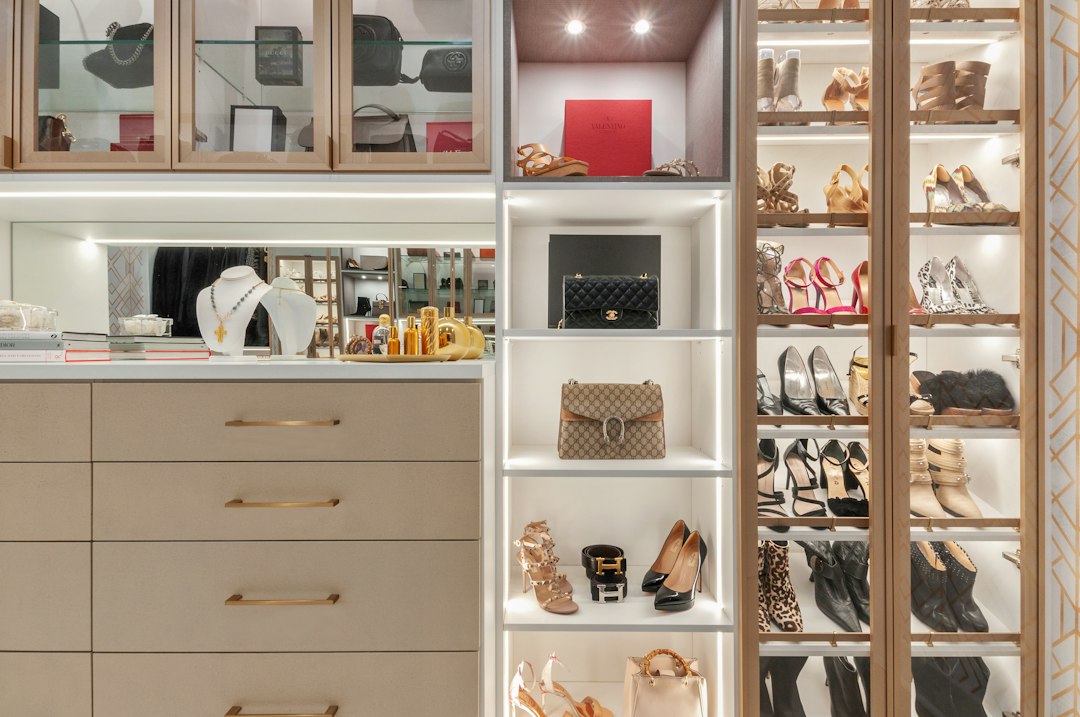
Shoes can be space hogs. Utilize vertical space with tiered shoe racks. Over-the-door organizers are great for flats, sandals, or children’s shoes. If you have shelf space, consider angled shoe shelves or stackable shoe boxes (clear ones let you see contents). For higher-end or dust-sensitive shoes, individual shoe boxes are best. Storing them heel-to-toe on a shelf can also maximize space.
The biggest pitfall? Piles of shoes on the floor. This looks messy, is a tripping hazard, and damages shoes. Dedicate a specific zone or system for them.
Accessory Organization: Belts, Bags, Jewelry, and More
Accessories often get lost or create clutter. Use specialized organizers:
- Belts: Roll them and store in drawer dividers or use belt racks that hang from the closet rod.
- Bags: Store smaller bags inside larger ones. Use shelf dividers or cubbies for structured handbags. Dust bags are essential for protecting higher-value items. Over-the-door hooks or wall-mounted hooks inside the closet can hold tote bags or backpacks.
- Jewelry: Use compartmentalized jewelry boxes, drawer inserts, or wall-mounted jewelry organizers. Keep necklaces untangled by hanging them on hooks or specialized racks.
- Scarves: Scarf hangers (ring or tiered) are invaluable. Alternatively, fold them neatly and store in bins or drawers.
Smart Storage Products That Actually Work in 2026
Best Drawer Dividers for Underwear and Small Items
These are lifesavers for drawers containing socks, underwear, ties, bras, and other small garments. Look for adjustable or modular honeycomb dividers for maximum flexibility. Fabric or felt-lined dividers are gentler on delicate items. Aim for dividers that create small, defined compartments for each item type.
Common error: Just tossing socks and underwear into a drawer. This becomes a chaotic mess quickly. Proper dividers ensure everything has a place.
Top Tier Shelf Organizers for Stacked Clothing
Shelf dividers (mentioned earlier) are paramount. They create clear boundaries between stacks of sweaters, jeans, or t-shirts, preventing them from leaning and collapsing. Clear acrylic or sturdy wire dividers are popular choices. For deeper shelves, consider adding stackable bins or clear plastic drawers that slide out, turning a deep shelf into accessible compartments.
Effective Hanging Solutions for Dresses and Suits
Invest in good quality, slim, non-slip hangers. Velvet hangers are excellent for keeping garments from sliding off. Use tiered hangers for pants or skirts to save rod space. Ensure you have different lengths of hanging space – a section for long items and a section for shorter items (shirts, folded pants) where you can potentially add a shelf above or below.
A common oversight is using wire hangers that damage clothing, or bulky plastic hangers that take up too much space. Uniform, slim hangers are key to maximizing rod capacity and preventing garment damage.
Stylish and Functional Shoe Racks and Over-the-Door Organizers
For shoe racks, prioritize stability and capacity. Tiered metal or bamboo racks are durable. For over-the-door organizers, choose ones with sturdy pockets made of durable fabric, not flimsy plastic that can tear. Look for options that allow shoes to breathe. Clear shoe boxes offer protection and visibility, but require shelf space.
Maintaining Your Organized Walk-In Closet Long-Term
The One-In, One-Out Rule: Preventing Future Clutter
This is the golden rule for maintaining order. For every new item you bring into your closet, an old item must leave. Buying a new shirt? Donate or discard an old one. This simple practice prevents your wardrobe from expanding uncontrollably and keeps clutter at bay.
Regular Tidy-Ups: Quick Maintenance for Lasting Order
Dedicate 5-10 minutes each week (or even daily) to quick tidying. Put stray items back in their designated spots, refold anything that’s become messy, and ensure hangers are all facing the same way. This prevents small messes from becoming overwhelming.
Adapting Your System as Your Wardrobe Evolves
Your needs change. Your style evolves. Your body fluctuates. Your organization system shouldn’t be static. Periodically (perhaps seasonally, or annually), reassess your closet. Are your current storage solutions still working? Do you need to declutter again? Make adjustments as needed to ensure your closet continues to serve you efficiently.